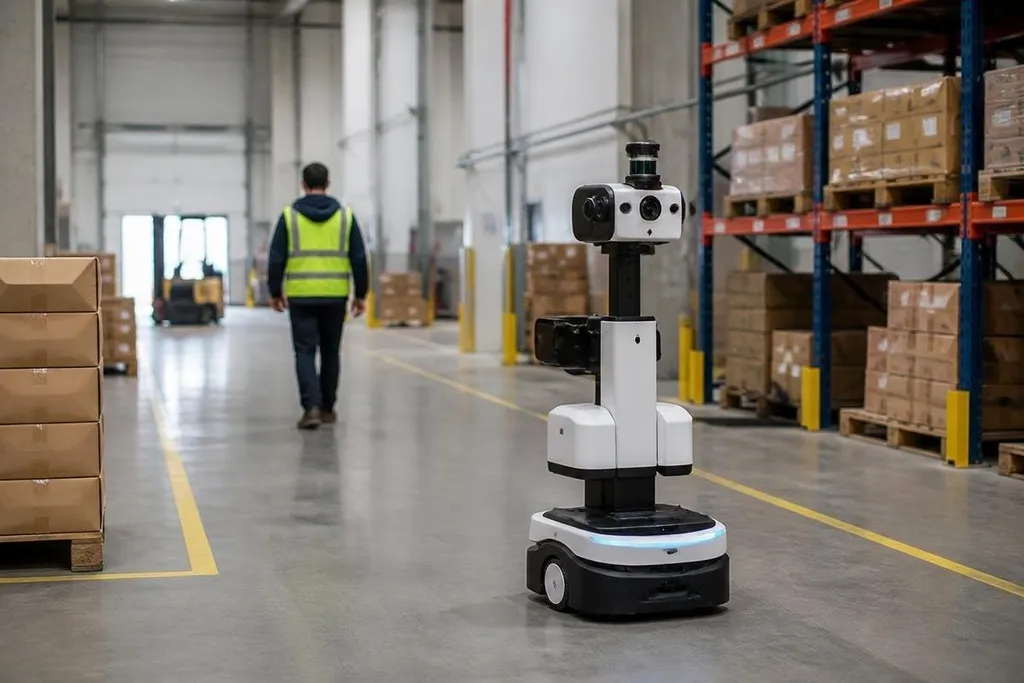
A warehouse robot can record video, map worker movement, read badge data, or carry a microphone. The ethical question starts before installation: what data does the robot need, who can see it, and when does collection stop?
- Cameras can record more than the task requires
- Location data can become a worker score
- A written deletion date matters as much as the robot’s sensor range
What the robot can see
A robot’s sensors may serve a clear task. A camera can check whether a pallet blocks an aisle. LiDAR can map walls and racks.
A badge reader can confirm who entered a restricted area. The same tools can also create a record of people’s movements. A map of robot routes can become a map of worker routes when the system links location data to names, badge numbers, or shift times.
That link changes the ethical problem. When it counts boxes, a robot is tied to a task. Storing where each person stood at 10:15, 10:30, and 10:45 creates a record about a person.
Microphones need extra care. If a robot only needs sound to detect a warning alarm, recording speech adds data that the task does not require. The safer design records the alarm event, not a full audio stream.
The purpose must stay narrow
A company should write one plain sentence before it turns on surveillance: “This system checks blocked aisles.” That sentence sets the boundary for collection and later use.
A second use needs its own review. Data collected to guide a mobile robot should not quietly become a worker ranking system. That change can affect pay, shifts, discipline, or dismissal, even if nobody designed the first system for those decisions.
The rule should cover contractors and visitors as well as direct employees. People need a visible notice near the monitored area, with the purpose, sensor type, retention period, and contact for questions.
A camera can record a worker without showing who may review the footage or when it must be deleted. Robot 24 can place the named company, robot, and policy date beside those rules before human review begins.
Human review matters
The system can flag a missed scan or an unusual route. It cannot explain a broken scanner, a blocked walkway, a medical need, or a change in the work area without human review.
A worker should be able to see the record used in a decision and correct a mistake. The review should name the data, the date, and the rule that led to the action. A score with no clear cause gives the worker no practical way to respond.
Managers also need limits. A dashboard that ranks people every few minutes invites constant watching, even when the original task only needed a count at the end of a shift. I’d reject any system that turns routine robot data into a hidden worker score.
The strongest case for surveillance is a narrow one: the data fixes a known safety or process problem, the company can show that less data would not do the job, and a person checks serious decisions.
A policy you can use before rollout
Put these points in the approval record before the robot enters a live work area:
- Name the task: Write the exact job the sensor supports, such as blocked-aisle detection or access control.
- Limit the data: Turn off audio, face matching, or worker identity links unless the task needs them.
- Set deletion dates: Choose a period such as 30 days for routine records, with a written reason for any longer hold.
- Control access: List the job roles that can view raw video, maps, or badge logs, and record each access event.
- Review errors: Give workers a route to request the record behind a warning, score, or disciplinary decision.
- Test the policy: Check after 30 days whether the robot collected data outside its stated purpose.
This list separates the robot’s job from the company’s appetite for information. That separation should stay in place after the pilot, when extra data can start to look convenient.
What happens after the pilot
A pilot should have a stop date, a named reviewer, and a written result. The review can ask how many alerts were useful, how many were wrong, and whether the robot needed worker identity data at all.
If the system cannot answer those questions, the company lacks a sound case for wider use. Workplace automation should reduce a task or hazard without making every worker carry an invisible sensor record through the shift.